Showing posts with label game ranger courses. Show all posts

Wednesday, 8 May 2013

2013 Tourism Indaba and Bhejane Nature Training


The Bhejane Nature Guiding and Wildlife Conservation 3 year programme is the only one of it's kind in the industry and has been developed to most accurately meet the demands of the Wildlife Tourism industry, for the employment of professional Guides, Conservation Research and Field Assistants and Conservation Entrepreneurs.

The Impi's will be Bhejane Nature Trainings' first graduates of the 3 year Advanced Nature Guiding and Wildlife Conservation programme and they are currently completing year 2. The third year’s is a compulsory year of industry placement during which these guides have to prove themselves. This year must be completed successfully in order to graduate.

As part of the practical component of their Leadership Skills and Tourism Entrepreneurship Module the students will be attending the 2013 Tourism Indaba in Durban from 11 - 14 May. They will be introduced to South Africa’s dynamic tourism industry, and will research a number of local tourism businesses. Bhejane is highly active on social media and passionate about tourism in Southern Africa and we are giving our students the chance to find out more about the type of experience these venues/companies offer their guests. We are also hoping to introduce them to the industry as well trained, professional guides that are able to act as ambassadors for South Africa and the guiding industry.

 
If you are interested in meeting with any of our guides, please contact the 
Student Placement Coordinator – Samantha Boswell at sam@bhejanenaturetraining.com


So, if you will be at Indaba this year, do look out for the Bhejane guides! We look forward to meeting everyone there and sharing the experience with fellow nature enthusiasts and conservationists. We will be keeping you up-to-date every step of the way by means of Facebook posts and pictures, so be sure to keep an eye on the Bhejane Nature Training facebook page and be part of the experience!


Bhejane Nature Training
Creating Awareness Through Wilderness...

Thursday, 2 May 2013

Impi's Water hyacinth Project


During National Water week on the 18 - 24 March, the Impi's and Lead Instructor Pieter Pretorius started the Water hyacinth project on one of the dams on the Bhejane property.

Water hyacinth (Eichhornia crassipes) is a perennial, aquatic plant, native to the Amazon Basin of
South America. It is a category 1 declared weed in South Africa and must be controlled, or eradicated where possible. In South Africa, water hyacinth was first recorded in 1908 when it was introduced into garden ponds. The rapid reproductive rate of the plant in conjunction with the activities of man and the absence of natural enemies has enabled the plant to invade water bodies throughout the country. In ideal conditions, the weed can double its population every 11- 18 days and seeds in the sediment may remain viable for up to 20 years.

Dense mats of vegetation can clog water systems, interfere with recreation and irrigation, promote siltation, exacerbate the effects of flooding and create anoxic water conditions which threaten biodiversity. Infestations could also create breeding habitats for disease- carrying organisms such as malaria mosquito's and the bilharzia snail. Water hyacinth is regarded as South Africa's most damaging aquatic weed and costs the country millions of Rands a year to try and control.

The Impi's first used the manual control of the weeds by removing it from the dam. This proved to be very labour intensive and with the rapid reproductive rate of the plants, will not prove to effective if it's not an ongoing daily project of removing these weeds.

Through some research Pieter found a possible solution for the control of these weeds; The Water hyacinth Mite and Mirid. These insects are the natural enemies of these plants and we managed to
obtain a few thousand of these insects and released them onto the weeds. These Mites (Orthogalumna terebrantis) and Mirid's (Eccritotarsus catarinensis) feed and lay their eggs in these Water hyacinth weeds. Mites will feed on the older weeds, and clear feeding tunnels can be seen on the leaves when held up to the light. They will lay their eggs in the younger plants. These larval and nymphal tunnels affect up to 90% of the surface area of the leaves and reduce the photosynthetic capability of the leaves and reduce the vigour of the plant.


The Mirid's feed on the leaves, causing yellowing/ browning of the leaves due to the extraction of chlorophyll. Mirid's however prefer only the mature stands of water hyacinth, where the leaves protect them from excessive cold and heat. 


The use of this method has proved very successful in parts of South Africa and under the right conditions no other control methods should be required. All the Mites and Mirid's have been released and we are keeping a close eye on the water body to see what effect they will have on the looming problem.

Thank you to Instructor Pieter and the Impi's for their hard work and we look forward to seeing the results in the near future! Keep following our Facebook page and blog for updates on the progress
made.

For additional information on the Water hyacinth and control methods,  visit the Agricultural Research Council Website: www.arc.agri.za

Tuesday, 12 March 2013

Industry News- 12 March 2013

By: Megan Balouza (Impi)


KZN Sharks Board

In order to protect swimmers we need to reduce the environmental impact of nets. Sharks play an important role as apex predators in regulating the numbers of animals on which they prey. Nets are not only harmful to sharks but also catch Rays, Dolphins, Turtles and other sea life. The Sharks Board has worked for some time on solutions to reduce the number of nets, including drumlines, a research project with the Endangered Wildlife Trust to determine the efficacy of dolphin deterrent devices and discretionary bathing. This discretionary bathing has allowed them to keep nets out of the water for as long as two months, minimizing the chances of large-scale mortalities especially during the annual Sardine Run. In a more recent project they are investigating using its patented waveform in a shark repellent cable that would surround a bathing area with an electrical field. Physicists and electrical engineers were contracted for this research in 2010 which has since commenced.
Wideside Magazine, 1 of 4, 2012
Further information: Tel 031 566 0400

Fish conditioning lead to later danger?

As the controversy over chumming for sharks and cage diving rages on there is always a nagging doubt that we are supporting something that could lead to later danger. It is rare for a diver to be attacked by a shark unless: they are in a bait ball, in the wrong place at the wrong time or acting foolishly and dive operators who offer these extreme experiences say they have never felt in any danger. Theoretically, anything that changes the behaviour of a creature in its natural habitat is unwarranted interference, however the test of stress in a creature is whether it continues to live, eat and breed in the area and the evidence of stress-free fish is everywhere. So is it a bad thing for fish to become conditioned to the presence of divers in their private domain? Maybe as we learn about them, they learn about us and judging by behaviour once they know us, they don’t seem to mind us.
Divestyle Magazine, Nov/Dec, 2012
Further information: divestyle.co.za
Article by: Jill Holloway

Dune forest rehab in Richards Bay

Richards Bay Minerals (RBM) mines mineral sands on sensitive sub-tropical remnant coastal dunes. High standards of rehabilitation have always been a top priority for the company and restoration began when mining began on mostly bare, degraded dunes in 1977.The objective was to restore natural forest values to mined dunes. Although it takes between 18 and 24 years to re-establish the same sort of vegetation evident in the surviving forest remnants nearby, results in Richards Bay to date have been outstanding. Restoration was achieved in a 3 stage successional development. First ground cover and grasses were established on reshaped dunes, then acacia forest moved in and finally mature forest species appeared .As predicted native fauna also re-established overtime. The plant and animal life found there now form a dune forest similar to other indigenous forests along the coast. The Richards Bay experience is an object lesson – particularly the benefits that flow from progressive rehabilitation and the value of long term monitoring and research. Truly understanding and re-establishing a complex local ecosystem is a journey, it takes experience, commitment and time.
Wildside Magazine, 3 of 4, 20012
Further information: www.rbm.co.za
Email: communication@rbm.co.za


Monday, 25 February 2013

Ex- Student: Casper Bester Career Update

By: Casper Bester

I studied at Bhejane Nature Training from Feb 2012 to June 2012 were I did my FAGASA level 1 as well as my Trails guiding course.

In 2011 I decided I want to change careers. It was time to follow my heart. Like most boys I always wanted to be a ‘Game Ranger’ and now finally I have the opportunity to go and do it. I found out about Bhejane via a friend’s daughter who studied there, so I drove up to Ethaltini bush camp to check it out. After talking to Dylan and Christa and seeing the camp, I knew I was on the right track. At first it was really scary to leave my job at the hospital, but when I look back now, I know I made the right decision to become a field guide.

I had an awesome time doing FGASA Level 1 as well as my Trails guiding course. I made so many new friends and met some amazing people. Bhejane was a excellent start to my new beginning.

When I look back at my time in the Bhejane camp today, the moments that really sticks out for me is our first aid training, it was so well done and all the practical work felt so real, thanks Andrew!! Another think that I won’t forget is that first time on our ARH practical when I shot with the .458 ruger. Wow, what a rifle!!!! 
The courses at Bhejane that I did, really provided me with not only the necessary field knowledge, but also the life skills that is needed to be a excellent guide and to really make it far in the industry. I also did my HP course, a snake handling course with Johan Marais and Jonathan Leeming’s scorpion course.

Today I am working at Makhasa Game reserve and Lodge, 15km north of Bhejane in Northern KZN, as a guide and assistant manager.


Let me tell you about my favorite sighting at Bhejane.
We were walking trails at Amakhozi Game lodge in September 2012. The morning of the 18th at about 9 o’clock, we were on top of one of the many hills at Amakhozi. I was walking lead and we just started descending from the top, when I spotted some buffalos at the foot of the hill. They were about 300m away and we estimated that the breading herd was more or less 50 in count. We were walking on the dirt road, as it was the only way down and I realized that this road is leading us straight into the herd. We continued very cautiously and when we were about 100m away from the herd they became aware of our presence. We stopped and watched them for 5min. I then walked ahead to see where this road was leading and luckily right at the bottom of the hill, the road turned to the left, away from the herd. We carried on walking, but when we reached the bottom of the hill, I realized the herd of buffalos is now about 65m away and they are following us. We stopped to see what they were up to and they also stopped. Now almost the whole herd was looking at the 5 of us and one by one the young buffalo bulls were coming closer and closer, 2 steps at a time. By now they were about 50m away from us and my hart is pounding like crazy. We walked on for another 10 paces, stopped and the buffalos were still closing in on us. We stopped and stood our ground. The young bulls are still out in front creeping closer. We stood our ground and had a “stare down” for about 15 min before the herd finally moved off and my heartbeat returned to normal. Sjoe……

Well, I don’t know where the bush will take me in the next years, but I would like to still be at Makhasa, but maybe as manager, with a Level 3 and SKS DG to follow.


Thanks Bhejane!! You guys rock!!

Casper next to the Mkuze River in Flood while on Trails
                                  

Monday, 18 February 2013

One Week at uMkhuze


By Tom and Olly

No electricity, no hot showers, no worries. Our week at Mkhuze was basic to say the least but absolutely fantastic.
Three students including ourselves and Arlo set off for Mkhuze earlier than the rest of our group to set up camp. After finishing we headed to the pool for a much needed rest, on our way back Paul our training assistant treated us to a brief game drive to see the observation point, little did we know we were going to be further rewarded with an awesome leopard sighting. We managed to catch him/her resting in the shade resting from the heat of the days and he/she posed beautifully for our eager camera lenses. We also spotted a large male white Rhino on reaching the observation point after a brief detour to retrieve Olly’s forgotten camera so he could take photos of the leopard.
We slept well that night despite the calls of Spotted Hyaena echoing round the camp. Blissfully in the morning we awoke to find a lack of mosquito bites on ourselves, we soon realised we hadn’t seen a single one and had stumbled upon a safe haven from these blood sucking manifestations of Satan.

The camp came to life Monday morning when the rest of the Amakentshane group arrived on the game viewers to a 5 star reception. We showed off our leopard pictures but little did we know that other members of our group would be treated to an even better sighting later in the week.
After catching up with the rest of the group we headed out on a game drive, the sheer amount of information thrown our way by the guides (or as we refer to them “walking encyclopaedias”) was enormous. What seemed like thousands of names of birds/trees and bugs brought about the realisation that one day we would hopefully be able to guide like them, albeit a long time away!
In the evening we quickly mastered the use of flashlights as without lights it got dark very quickly, and the odds of walking into trees or taking the wrong path to your hut multiplied tenfold.
On the second day we rose with the sun, and headed out of camp by 5:00am much to the shock of several members of our group. The morning drive was quiet and we found ourselves at Kumasinga hide at around 8:00 for breakfast. Once the cereal was inhaled we entered the hide and had several good sightings of birds to add to our ever growing species lists.
We returned to the environmental camp and spent an evening around the fire eating up a stew made by the student duty team. The darkness made it a lot easier to eat! We were also welcomed to the camp by a resident genet that watched over our fire from the branches of a Lembombo Wattle.


 Day three was fantastic however, throughout the morning game drive several acacias were brutally attacked by our guides cutting off branches with their Leatherman’s. It didn’t take Sherlock holmes to figure out what was coming our way, was less than desirable. However we were offered some light entertainment by Wanroe’s odd bird identification, especially his stringy call on a “knob backed lark”. We spent the afternoon identifying those damn saplings. General moaning about how the branches weren’t in the book, or the fact they all looked the same were occasionally punctuated with shouts of pain as people (mainly Brett) stabbed themselves on sharp thorns and spines. This was only the beginning of the hard work….
Day four and so the students take over. This was the first of many days in the Hotseat, as it became to be known. While there we were required to take over guiding duties and show the rest of the vehicle what we had learnt. So we threw in all the information we had gained on birding, trees, mammals, tracks, the park itself and the vehicle we were riding in. We were such good guides we even managed to track down the elusive black rhino in thick bush and show it off to our guides, this is when the student surpassed the master for a few brief seconds.
Later on that day we were taken to the observation point to have a night time astronomy lecture. This was particularly awesome, as there is nothing that can really compete with staring up the stars on a clear night with hyaena serenading us in the background. Nick held us captive with his stories of the heavens and the various mythologies behind them.

Day five marked the end of the week and the resident nicotine addicts in the group could stop thinking about rolling up various types of animal scat into a cigarette and look forward to a proper one when they returned to camp. We had a morning game drive which was mostly uneventful except for a close encounter of the horned kind. One of the guide vehicles was charged by a male white rhino trying to protect his female. They rewarded us afterwards with some stunning photo opportunities. 

Many of us weren’t too keen to head back as we were very happy to have no electricity over mosquitoes any day.
It was a nice feeling to know that when we next returned we would be on our assessment drives for our FGASA level one qualification and would definitely know tonnes more than what we currently do.
All in all we squeezed every last drop of information and experience that we possibly could out of the week. We would like to give a big thanks to our guides, Paul, Nick and Pieter for blackmailing our tired and weary minds into work for a refreshing pool session at the main camp.

Monday, 4 February 2013

Re- discovery of the Largest Orbweaving Spider Species with Bhejane Nature Training


By: Hanroe Taljaard

The Bhejane Nature Training camp is full of excitement and action as the students arrived this month to continue, or begin their Nature Guiding qualifications for 2013. We welcome both our “Impi’s” as they continue into their second year of their 3 year Advanced Nature Guiding Course, as well as the students beginning their first year of Advanced Nature Guiding. All students are full of enthusiasm for the year that lies ahead.

Early last week we had a great discovery. During one of our Frogging practical’s, Ryan Tippett, one of the lead instructors at Bhejane Nature Training came across a giant Orb Web Spider and immediately recognized that this is not like any other known species of Orb Web Spider. After taking a few photos and doing some internet research, we came across Dr. Matjaz Kuntner’s research abstract published in October 2009 when the species was rediscovered and its status as a valid extant species confirmed. 

 Left: Nephila komaci, Female paratype as sketched by Matjaz Kuntner in his research abstract published in 2009.
Right:  Picture of first recorded sighting of N. komaci on the Bhejane Nature Training property
 
The first specimen of this spider was collected in 1978 at Sodwana Bay and was discovered in 2000 in the collections from Pretoria. Two expeditions to find this species in the wild were unsuccessful and it was thought that the species was a hybrid or perhaps extinct. In 2003 a second specimen from Madagascar was discovered in a Viennese Museum but since then they had failed to find any records of it in more than 2500 samples from 37 museums. However, two additional females and a male were recently collected in Tembe Elephant Park and it was clear that N. komaci was a valid, new existing Nephila species.

Photographs of the spider were e-mailed to Dr. Matjaz Kuntner on Saturday morning and he has confirmed that this is indeed the first recorded sighting of N. komaci (Komaci’s Orb Spider). He has also confirmed that the photographs taken are in fact the first photographs of live specimens, although there are photos of a spider in Gorongoza NP which he plans to go and see later in the year. Dr. Kuntner was very excited and requested that we keep a specimen that can be sent to him for examination.

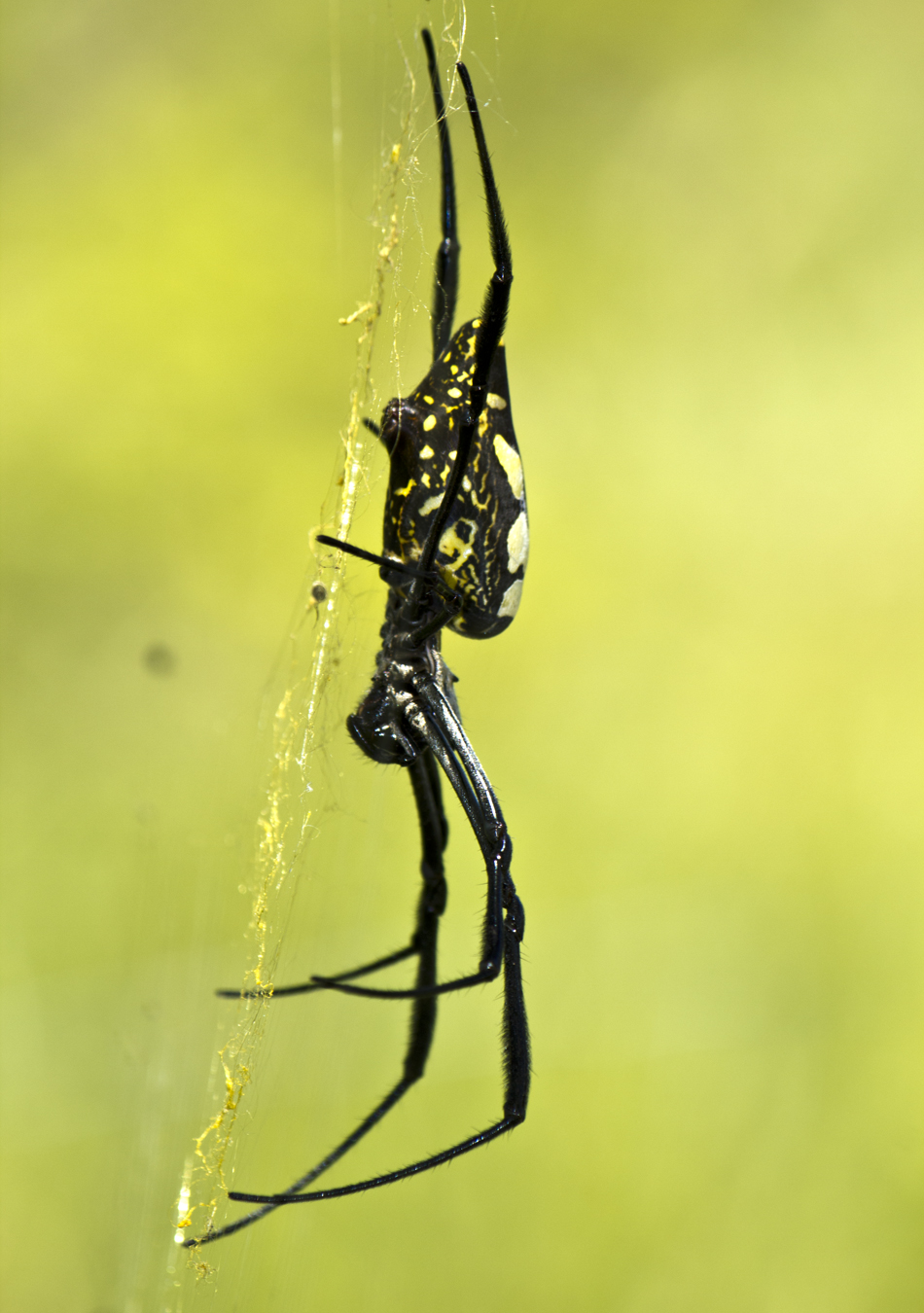
Picture taken on Bhejane property of what we believe is the male N. komaci as he sits above the huge female in the web
Very distinctive coloration on N. komaci as depicted in this picture from a specimen on Bhejane property.

Since making the confirmation of the sighting public, reports of more N. komaci sightings have been called in. We have counted a total of 5 different specimens on the Bhejane property and another 5 on Makhasa Game Reserve. We have also received reports of this species on other properties in the surrounding area. 

Picture of one of five N. komaci specimens found and photographed on Makhasa Game Reserve on Saturday afternoon.
This is a wider shot of the picture above. This particular N. komaci web was about 8m high, where all the previous specimens' webs were spun about 3-5m from the ground.


We at Bhejane are very excited about the discovery and look forward to Dr. Kuntners’ results as he and his colleagues can now go ahead and complete their studies on ‘The Evolution of Gigantism in Nephila.’  Dr. Kuntners research abstract is available to read at www.plosone.org. 

Screen shot of the first half of page one of Matjaz Kuntner and Jonathan A. Coddington that released this research paper in 2009. Go to www.plosone.org to view
The small 'silvery' spiders that we found present in the web are kleptoparasites from the family Theridiidae, who live in the webs of the big hosts. "They come in various shapes and color (silver and reddish ones are probably different genera, and there could be undescribed species," commented Dr. Matjaz Kuntner on this image.

 We are now in the process of collecting some of these specimens for Dr. Kuntner; label them precisely with locality, date and collector where he can use this information to recheck taxonomic diagnostics, measure them, and also extract their DNA to get an idea of genetic picture, e.g. if they are all very homogeneous implying population bottlenecks etc.


An exciting year lies ahead for the staff and students of Bhejane Nature Training. Follow our Facebook page and Blog Spot to keep up to date with our field news and to follow the story of this discovery.


Tuesday, 29 January 2013

2012 Bhejane Public Photo Competition


At the end of 2012 we announced the start of the photo competition and today, we have the results for you! Public photos were sent into the Public Photo competition and the Bhejane students had a separate competition running. It was awsome to have such a nice response to the competition and photos came in from near and far! Below are the categories entries could be submitted into:

Public Competition Categories:
  • Wildlife
  • Birds
  • Landscapes
  • Marine
  • People and Nature
  • The Smaller Things
Photos were chosen by the amount of 'likes' they received on Facebook  by the public over a period of 2 months and contestants could get there friends and family to go to the Bhejane Nature Training Facebook page and to like their photos. Below are the category winners:

Wildlife
"I wanted to be seen... " by Calvin Kotze
Calvins Image Description:
"I believe that this photo shows us what a leopard is really about, they say you will only see a leopard if it wants to be seen, and i can fully agree with that, i love this photo because its not your "typical" leopard in a tree, or a leopard out in the open..


Birds
Photo by: Isolde Schoombie 

Isoldes' Image Description: 
"This was taken at bhejane, during my level 1 training in Mkuze game reserve. It is a pygmy kingfisher. "


Landscapes
Photo by: Matthew Grace

Matthews' Image Description: 
"This image was captured at sunset on Lower Sabie Bridge Kruger National Park... I sat in anticipation for the Hippo to come out of the water with the sunset streak nearby... It didn’t really matter which Hippo came out but this one happened to make it perfect..."


Marine 
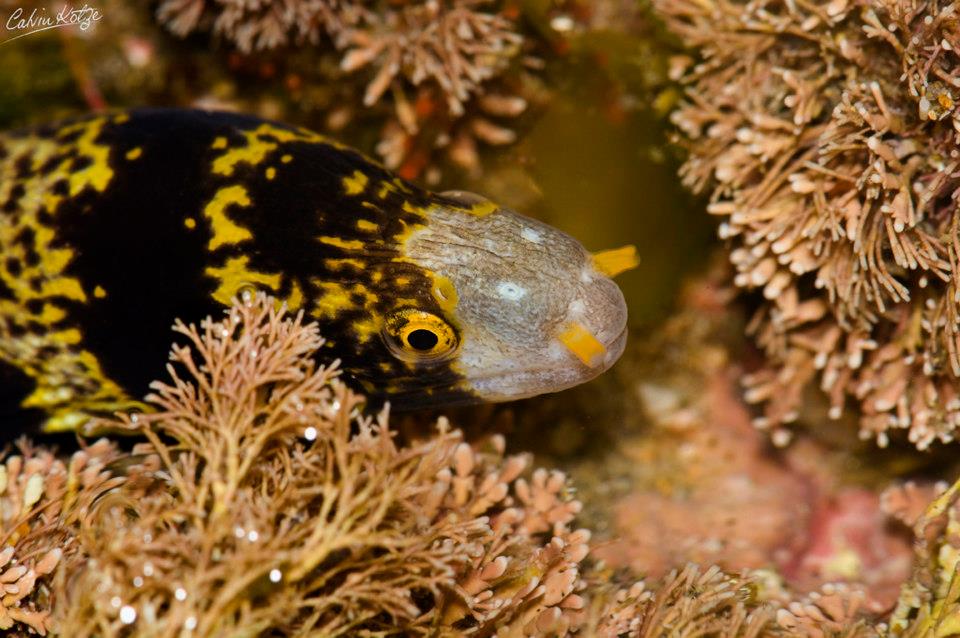
Photo by: Calvin Kotze

Calvins' Image Description:
"This picture was taken while i was studying with Bhejane. It was taken at Cape Vidal"


People and Nature
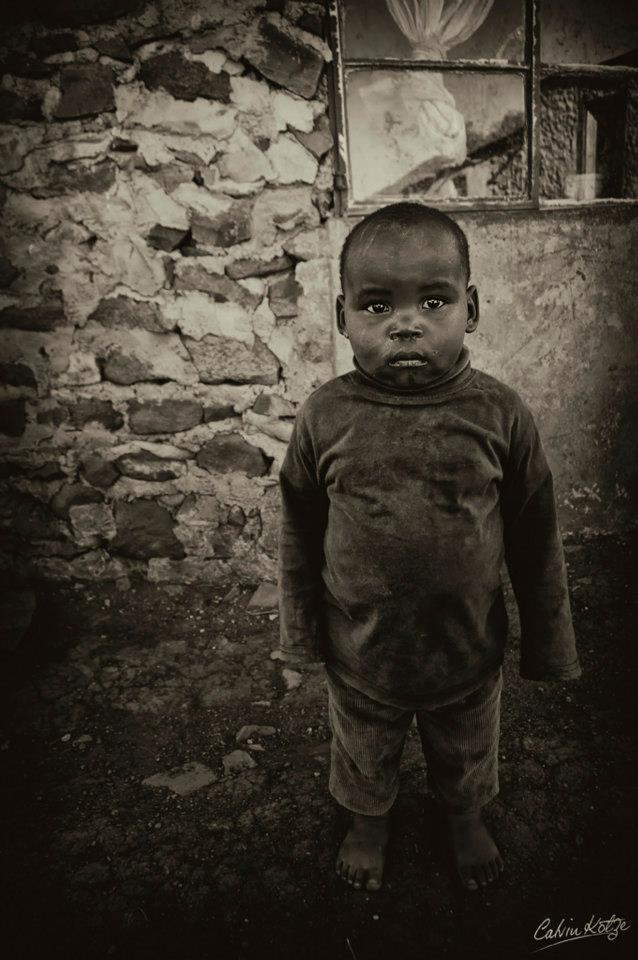
"Hope"-  by Calvin Kotze


Calvins' Image Description:
"This photo was taken while studying at Bhejane at one of the local villages we used to visit from time to time..."


The Smaller Things 
"The Start of Life"- by Calvin Kotze

Calvins' Image Description: 
"This has got to be one of my proudest photos, after spending almost 40min and taking
over 600 shots, i eventually captured a shot that spoke to me...
This is a photo of a baby (tadpole) Eastern Olive Toad... I wont give away exactly how it
was taken but yea, this was the result..."


Im sure you would agree that these are some awsome pictures! The overall winner of the public photo competition, with a total of 63 votes is Calvin Kotze's - "I wanted to be seen". Congratulations Calvin and thank you for your participation! We will be sending you your Bhejane Nature Training hamper and keep up the good work!!
"I wanted to be seen" by Calvin Kotze